
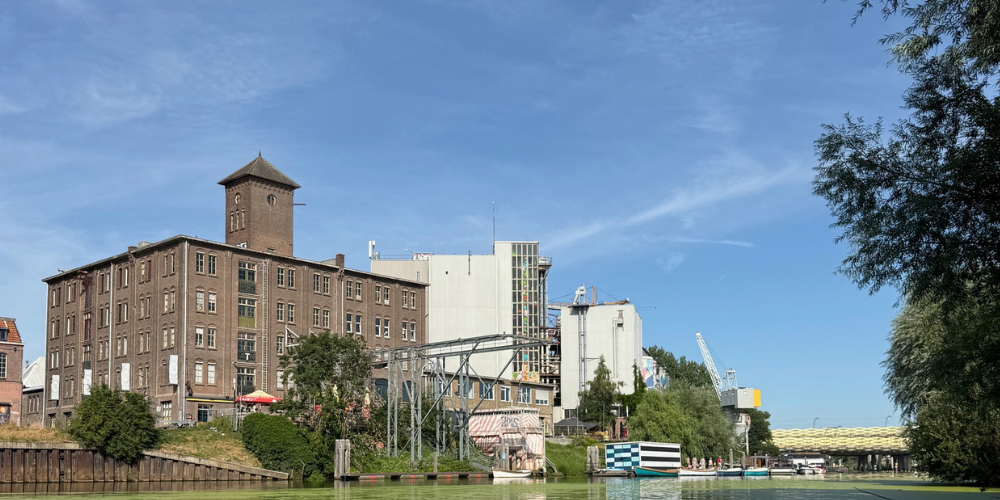
There is a side to ’s-Hertogenbosch that feels very different from its famous medieval centre. Along the Dieze, just beyond the historic heart of the city, old factory buildings, enormous silos and steel walkways form the backdrop to cafés, studios, cultural venues and street art. This is the Tramkade: an industrial waterfront that has reinvented itself as one of the city’s most distinctive places to visit.
The transformation is still underway. What began as a temporary experiment after the closure of the area’s animal-feed factory has grown into a creative community – and is now becoming part of a much larger urban development.
in this article:
history of the Tramkade: from industry to alternative hub
In 1909, Bruyelle built a flour mill on an undeveloped site beside the railway and the Dieze. The location was ideal for transport, with grain arriving by water and the railway providing another important connection. The imposing brick building that remains today is known as the Mengfabriek.
After the Second World War, the site changed direction. In 1949, Koudijs Voederfabrieken took over and production shifted from flour to animal feed. The factory grew, adding new buildings, transport facilities and the large silos that still define the Tramkade skyline. De Heus took over in 1998.
In 2014, De Heus ended production and the municipality took ownership. Rather than leaving the buildings empty, the city launched the Tramkade Experiment, bringing together makers, artists, cultural organisations, entrepreneurs and hospitality. More than a decade later, the experiment has transformed the former factory into a lively creative hub.
what to see at the Tramkade?
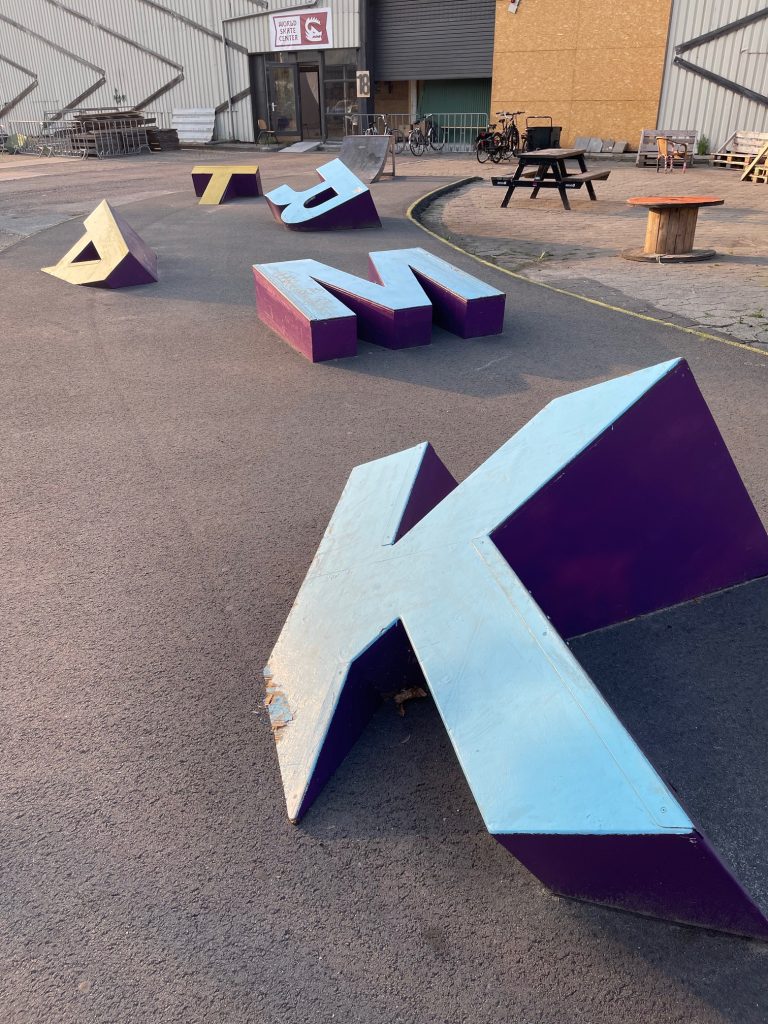
At the heart of the area is the Mengfabriek. Look up and you’ll see the area’s distinctive silos, pipes and bridges, some transformed by large-scale street art from Kings of Colors. The Werkwarenhuis adds to the creative atmosphere, bringing makers, entrepreneurs and cultural initiatives together under one roof. They also have great comfort food and snacks. Feeling nostalgic? Consider visiting the Pixel Arcade for a game of pinball or other arcade games.
Nearby, the Verkadefabriek occupies a former biscuit factory from 1929. Since becoming a cultural centre in 2004, it has combined cinema, theatre, music, festivals, food and drink, and space for artists and makers. The waterfront is another highlight. Beside the Dieze, the Tramkade feels surprisingly open for a place so close to the city centre. You can explore the area from the water too, with boat, canoe and SUP activities available.
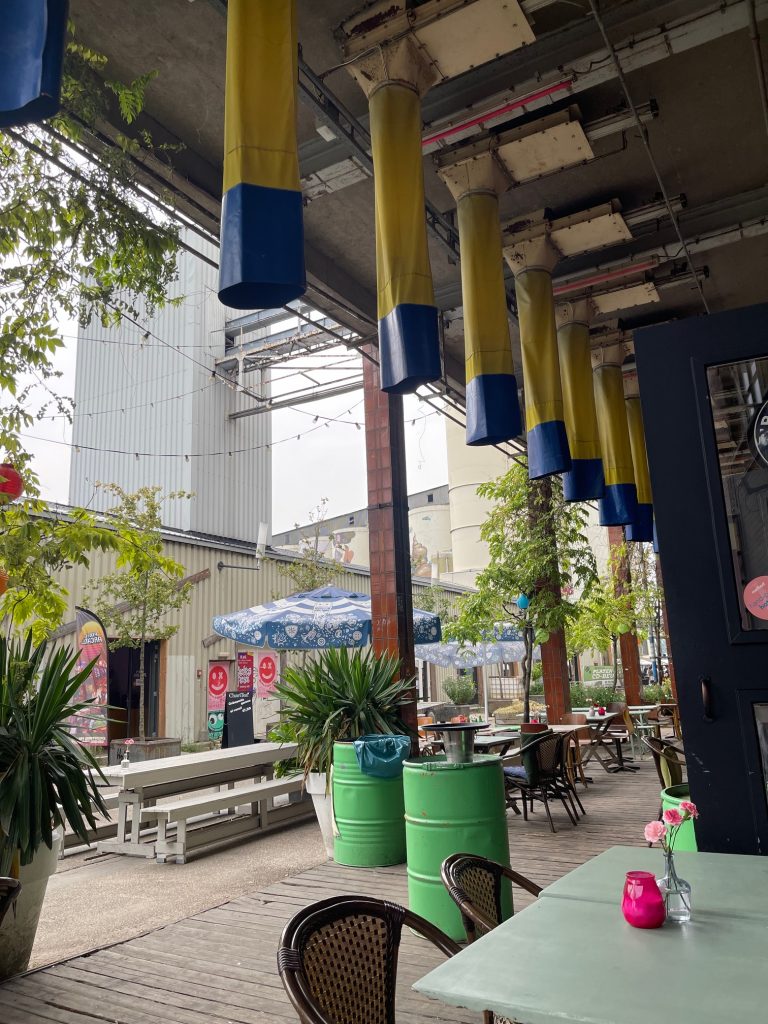
Add cafés, breweries and places to eat, and the Tramkade is somewhere to linger. The best way to experience it is simply to wander: follow the waterfront, admire the industrial details, look out for murals and see what you discover. Looking for a truly unusual stay? Spend the night at the Bossche Kraan, a former harbour crane transformed into a stylish two-person hotel room!
the future of the Tramkade
The temporary Tramkade Experiment was never meant to last forever. In 2024, the city approved a framework for the area’s transformation, with the aim of creating a permanent neighbourhood while preserving its industrial and creative character.
The plans currently include around 225 homes and 17,500 square metres of space for culture, makers, workspaces, sport and hospitality. Sustainability, circularity and the reuse of the area’s industrial heritage are important parts of the vision.
The plans are now moving forward. In August 2026, four developers were selected with the first phase currently expected to begin in 2027. Other ideas, including a creative mixed-use building are still being explored.
The Tramkade will therefore change considerably, but the ambition is clear: to turn it into a permanent part of Den Bosch while keeping the creative spirit that made the area special in the first place and inviting you to visit again and again.
Don’t want to miss any of our articles?
Subscribe to our newsletter!
Once a month, you will receive our latest news and tips 🙂