
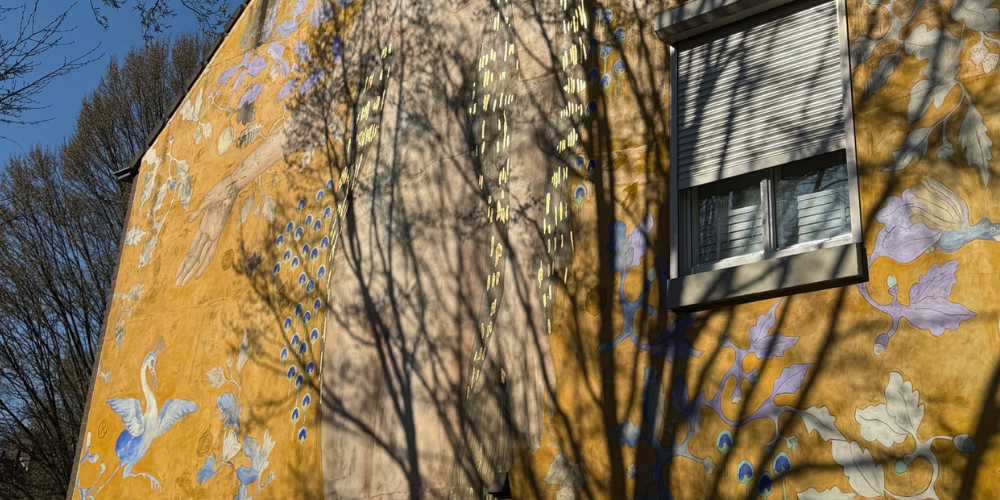
When it comes to ’s-Hertogenbosch, there is one name that is impossible to avoid: Hieronymus Bosch. More than 500 years after his death, the medieval painter is still one of the city’s most recognisable figures. His strange creatures, fantastical landscapes and nightmarish visions have become part of the identity of Den Bosch itself.
But who was the man behind these extraordinary paintings? Why did he fill his works with monsters, demons and bizarre scenes? And why does a painter who died in 1516 still have such a strong presence in the city today?
in this article:
who was Hieronymus Bosch?

Hieronymus Bosch was born around 1450 in ’s-Hertogenbosch, at a time when the city was a prosperous centre of trade in the Duchy of Brabant. His real name was Hieronymus van Aken. He became known as Bosch because of his connection to his home city. His father, Antonius van Aken, ran a workshop on the Markt in Den Bosch, and several other members of the family were also artists.
He also had strong connections to the religious life of the city. Bosch was a member of the Illustrious Brotherhood of Our Blessed Lady, and the Brotherhood was one of his important clients. This can explain the importance of sin, temptation, morality, death and salvation in his paintings.
And yet, for all that we know about his surroundings, Bosch himself remains surprisingly mysterious. We have relatively few documents about his personal life, and even the year of his birth is uncertain. His reputation, however, spread far beyond Brabant. Bosch was already a celebrated artist during his lifetime, and other artists began copying his distinctive imagery.
After his death in 1516, his strange visual language continued to influence artists and collectors across Europe. Around 25 paintings are today generally accepted as authentic Bosch works.
where to see Hieronymus Bosch’s most famous paintings?
There is a slightly surprising fact about Bosch and Den Bosch: the city where he lived and worked does not have one of his major original paintings on permanent display. The surviving works are scattered across some of Europe’s great museums, making Bosch a possible element of several city trips. The Jheronimus Bosch Arts Center presents reproductions of all of the artist’s paintings, allowing to get a full overview of his work.
Madrid: Museo del Prado
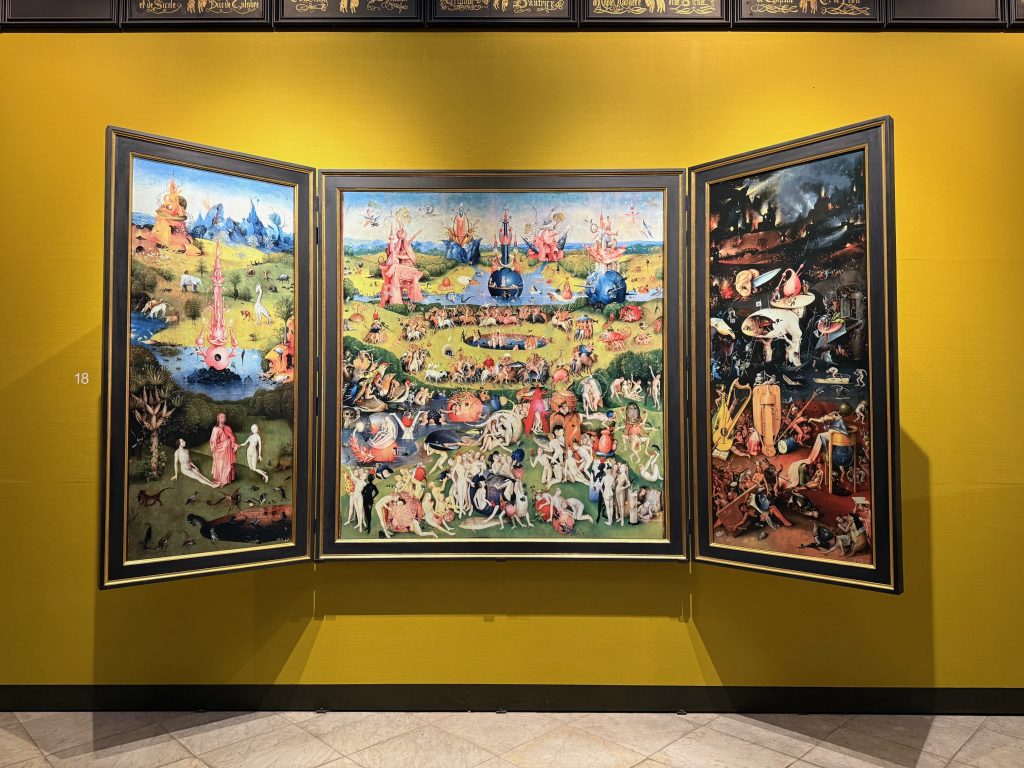
If you want to see the largest concentration of Bosch’s paintings, Madrid is the obvious place to start. The Museo del Prado holds an exceptional collection of his work, including The Garden of Earthly Delights, The Haywain and other important paintings. The museum’s Bosch collection is one of the highlights of its Northern European art holdings.
Venice: Gallerie dell’Accademia
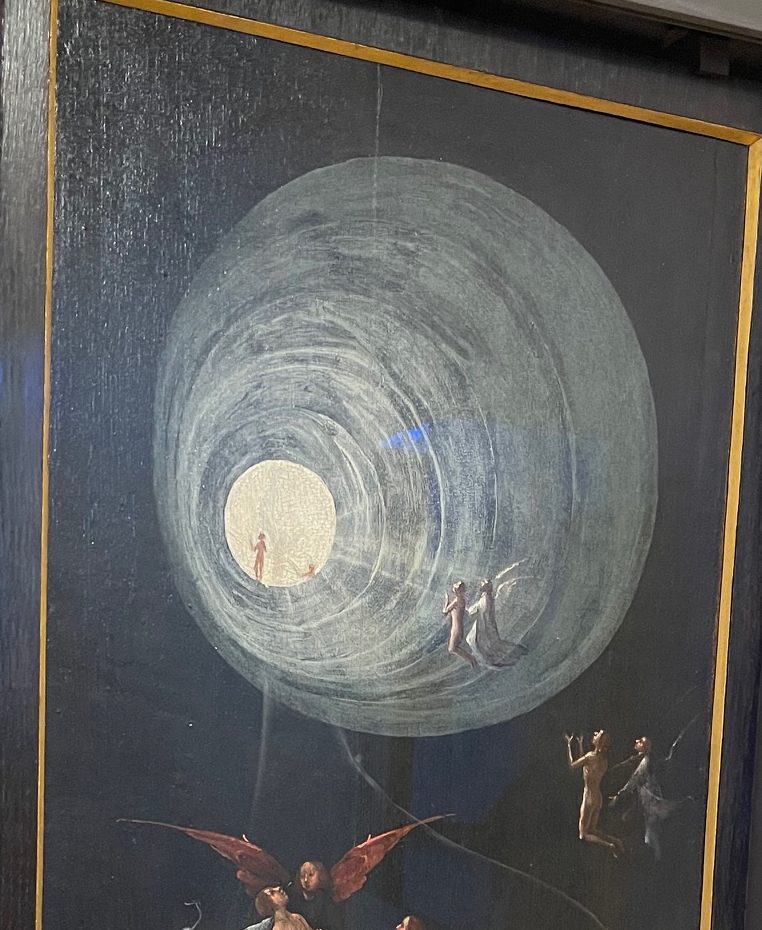
Venice is another essential destination. The Gallerie dell’Accademia houses three important Bosch works. They came from the collection of the Venetian cardinal and art collector Domenico Grimani and are displayed together in a dedicated room.
Bruges’ Groeningemuseum and Rotterdam’s Museum Boijmans Van Beuningen
In Bruges, the Groeningemuseum is another important stop for Bosch lovers, with its famous Last Judgment triptych. It makes a visit to Bruges particularly interesting for anyone exploring the artistic world of the Low Countries in the late Middle Ages.
Closer to home, Museum Boijmans Van Beuningen in Rotterdam has four Bosch paintings and two drawings, including The Owl’s Nest. The museum describes itself as the only museum in the Netherlands with a collection of paintings by Hieronymus Bosch. For visitors based in the Netherlands, Rotterdam is therefore one of the easiest places to combine a Bosch visit with a trip to Den Bosch.
Vienna and Lisbon
Other important Bosch works can be found in Vienna and Lisbon, including the famous Last Judgment in the Kunsthistorisches Museum in Vienna and The Temptation of Saint Anthony in Lisbon’s Museu Nacional de Arte Antiga.
how Hieronymus Bosch still shapes Den Bosch today
Bosch’s influence is still visible nowadays in Den Bosch, and you can discover it simply by walking through the city. Start at the Jeroen Bosch statue on the Markt, then visit Huis van Bosch, the historic building associated with his family and childhood.
At the Jheronimus Bosch Arts Center, you can explore reproductions of his complete oeuvre and learn more about his life and artistic world, while the Noordbrabants Museum puts his work into the wider context of Brabant’s art history and played a major role in the 2016 Visions of a Genius exhibition that brought many of his original works back to the city.
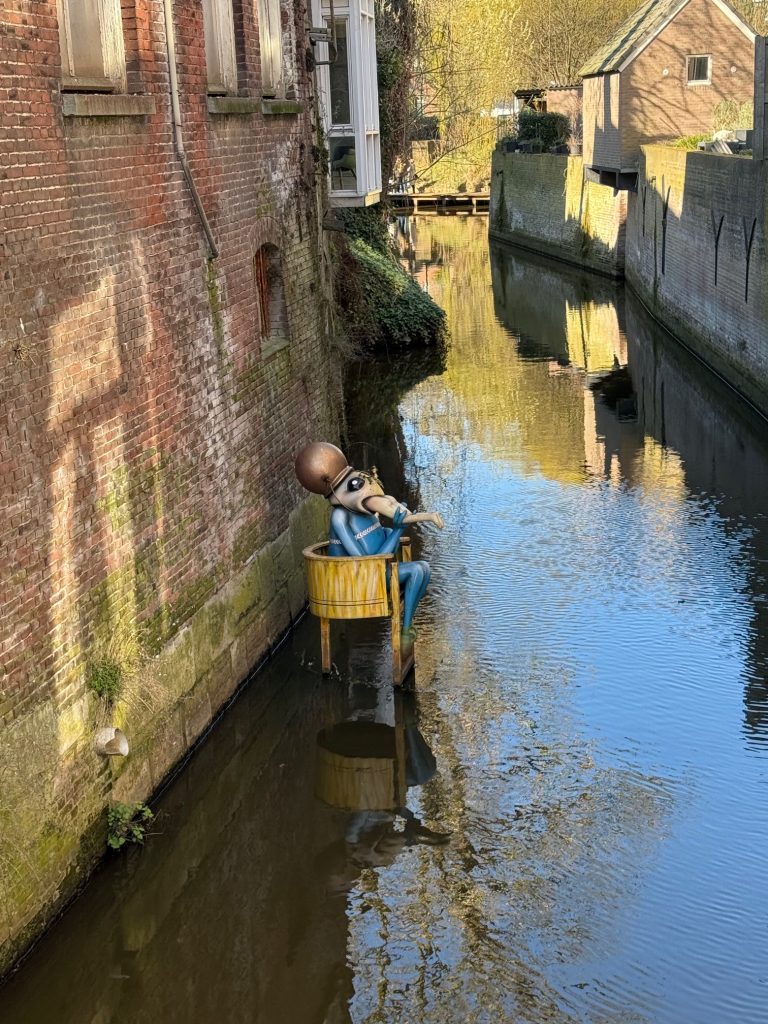
Bosch’s legacy also lives on outside museums, through street art and murals such as those in the Jeroen Bosch Garden. Finally, Bosch Parade brings his fantastical world to life on the waterways of Den Bosch, with contemporary artists reinterpreting his imagery to explore modern society.
Hieronymus Bosch died in 1516, but in ’s-Hertogenbosch, he never really disappeared. While his original paintings are now scattered across museums in Europe and beyond, his hometown has preserved something no museum can recreate: the connection between the artist and the city that shaped him.
Five centuries later: the themes behind his paintings: greed, temptation, desire, foolishness and fear, are just as relevant today as they were in the Middle Ages. And that is why, even today, his monsters can feel strangely familiar; and why a great place to discover Hieronymus Bosch is still ’s-Hertogenbosch, the city that gave him his name.
Don’t want to miss any of our articles?
Subscribe to our newsletter!
Once a month, you will receive our latest news and tips 🙂